
By Jim Sprouse, Co-founder of Ember Pro | NFPA Certified Wildfire Mitigation Specialist
If you have a propane tank on your property in a California fire zone, you need a plan for it. Propane tanks do not typically explode during wildfires the way movies suggest, but they are a serious hazard that requires specific preparation. Improperly positioned or unmaintained propane tanks have contributed to structure losses, complicated firefighting operations, and created dangerous conditions for evacuating homeowners.
Curious about your property’s actual wildfire risk? Our free calculator shows your CAL FIRE zone, exposure level, and recommended next steps based on your address.
Get your free risk scoreWill a Propane Tank Explode in a Wildfire?
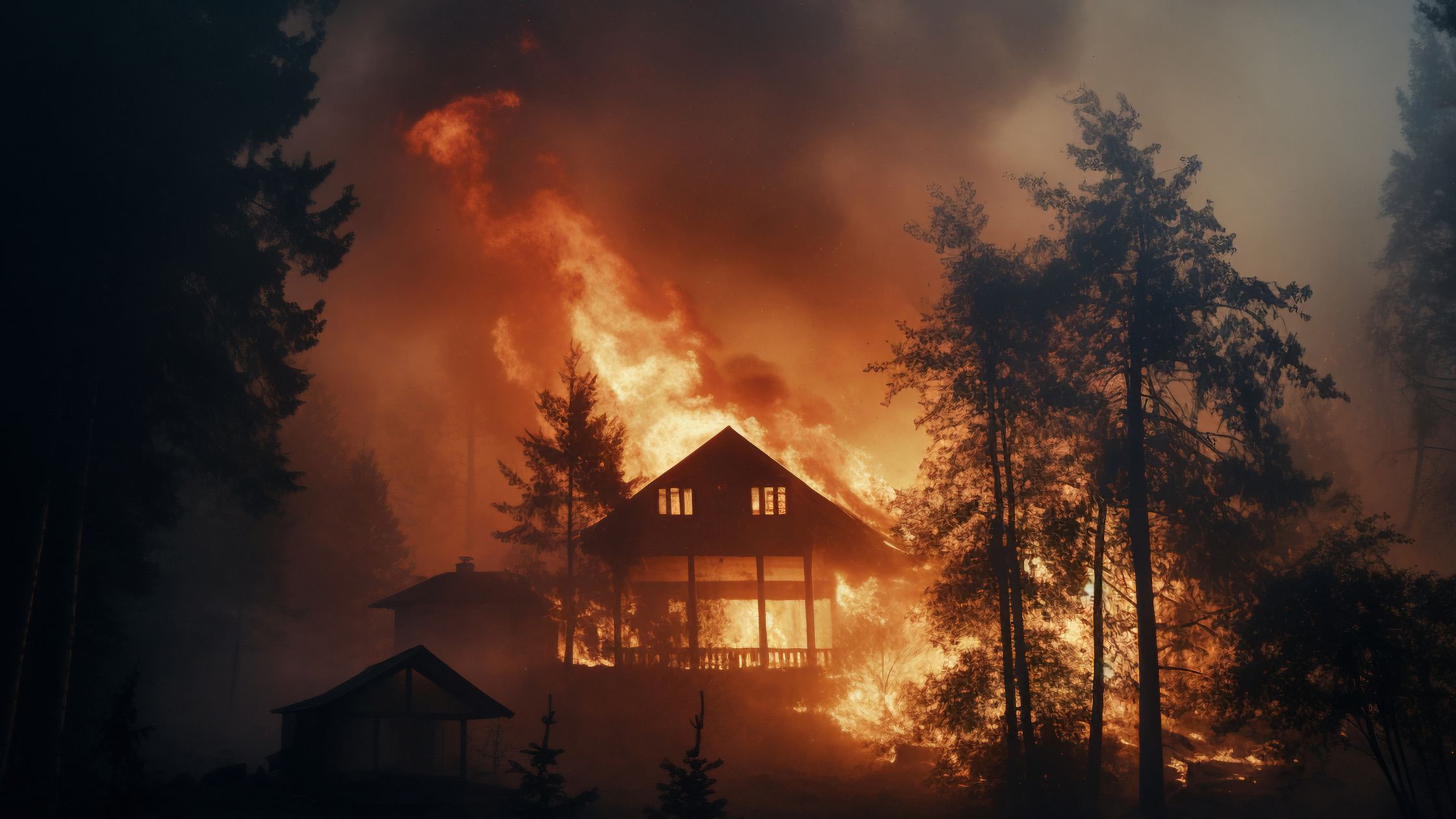
The short answer is: not usually, but it can vent violently. Propane tanks have pressure relief valves designed to release gas before pressure reaches explosive levels. When a tank is exposed to fire, the relief valve opens and vents propane gas, which then ignites as a controlled torch-like flame. This is called a BLEVE risk (Boiling Liquid Expanding Vapor Explosion) and while true BLEVEs are rare with properly functioning relief valves, the venting flame itself is extremely dangerous.
A venting propane tank produces a jet of flame that can extend 10 to 30 feet, igniting everything nearby. If that flame reaches your home, attached structures, or vegetation, it creates a secondary fire source independent of the wildfire itself.
Not sure which step to prioritize first? Our wildfire risk calculator shows your CAL FIRE zone and exposure level — so you know exactly where to start.
Propane Tank Placement: The 10-Foot Minimum
NFPA 58 and California Fire Code require minimum clearance distances between propane tanks and structures:
- Tanks under 125 gallons: Minimum 10 feet from buildings, property lines, and ignition sources
- Tanks 125 to 500 gallons: Minimum 10 feet from buildings
- Tanks over 500 gallons: Minimum 25 feet from buildings
Many older rural California properties have tanks closer than these minimums, sometimes right against the house. If your tank is too close, relocating it is a priority.
How to Protect Your Propane Tank From Wildfire
- Verify clearance distance. Measure from the tank to the nearest structure. If less than 10 feet, plan to relocate.
- Clear vegetation around the tank. Maintain a minimum 10-foot clearance of bare ground, gravel, or hardscape around the tank. No brush, grass, woodpiles, or combustible storage within 10 feet.
- Ensure the relief valve works. Have your propane provider inspect the pressure relief valve annually. A stuck valve is the scenario that creates BLEVE risk.
- Keep the tank full. A full tank is actually safer than a partially empty one. Liquid propane absorbs heat, keeping internal pressure lower. An empty tank with residual vapor heats up faster.
- Install a gravel pad. The tank should sit on a noncombustible surface, not grass or mulch. A 3-inch gravel pad extending 3 feet beyond the tank in all directions prevents ground fire from reaching the tank.
- Protect the supply line. The copper or flexible line from tank to house should be protected from radiant heat. Metal shielding or underground routing is ideal.
- Know your shutoff. Know where the manual shutoff valve is and how to operate it. During an evacuation, shut off the tank if safe to do so.
During Evacuation: Shut Off or Leave On?
If you have time and can do it safely, shut off the propane tank valve before evacuating. Turn the valve clockwise until it stops. This prevents gas from flowing if the supply line is damaged during the fire.
However, do not delay evacuation to shut off propane. Your safety comes first. If you cannot reach the tank safely, leave it and evacuate.
Underground vs Above-Ground Tanks
Above-ground tanks are exposed to radiant heat and direct flame contact. They are the most common type and the most vulnerable during wildfire.
Underground tanks are significantly more protected from wildfire. The earth insulates the tank from heat, and there is no exposed surface for flames to contact. If you are installing a new tank in a fire zone, underground installation is worth the additional cost.
Underground installation costs approximately $1,500 to $3,000 more than above-ground but provides dramatically better wildfire protection.
These are general costs. Your actual investment depends on your property’s fire zone, exposure level, and available grants or rebates.
Check my risk scorePropane and Defensible Space
Your propane tank area should be treated as part of your Zone 0 and Zone 1 defensible space. That means:
- 10 feet of cleared, noncombustible ground around the tank
- No woodpiles, lumber, or combustible storage near the tank
- No overhanging tree branches above the tank
- Supply lines protected and accessible for shutoff
- Clear access for fire crews to reach the tank
What Fire Crews Need to Know
If fire crews arrive at your property, they need to quickly identify propane tank locations. Consider:
- Marking the tank location with reflective signage visible from the road
- Noting propane tank location on any property map you leave for firefighters
- Ensuring the tank is visible and not hidden behind vegetation or structures
Get your wildfire risk score free at risk.emberprousa.com
Editor’s note: Your insurance situation depends heavily on your property’s actual fire exposure. Our free risk assessment factors in official CAL FIRE data to show what your risk level actually is — useful context before talking to your carrier.
Frequently Asked Questions
Will my propane tank explode in a fire?
Unlikely if the relief valve functions properly. It will vent and produce a torch flame, which is still very dangerous.
How far should my tank be from the house?
Minimum 10 feet for tanks under 500 gallons. 25 feet for larger tanks.
Should I empty the tank before fire season?
No. A full tank is actually safer. Liquid propane absorbs heat and keeps internal pressure lower.
Can I bury my existing tank?
Not usually. Above-ground and underground tanks are different models. You would need to install a new underground-rated tank.
Should I shut off propane before evacuating?
If safe to do so, yes. Turn the valve clockwise. But never delay evacuation for this.
Is propane covered by wildfire insurance?
The tank and supply system are typically covered as part of other structures or dwelling coverage. Check your policy.
How often should the relief valve be inspected?
Annually, by your propane provider as part of routine service.
Does Ember Pro assess propane tank placement?
Yes. Propane tanks are part of our comprehensive home hardening and Zone 0 assessment.
Next Steps
Walk outside and measure the distance from your propane tank to your home. Clear 10 feet of vegetation around it. Have your provider inspect the relief valve. Then check your wildfire risk score for a complete property assessment.
Protect. Defend. Preserve.
References
- NFPA 58: Liquefied Petroleum Gas Code
- California Fire Code
- CAL FIRE Defensible Space Guidelines
- Propane Education and Research Council