


1/16″ vs 1/8″ Ember Vent Mesh: Why That Tiny Difference Could Save Your Home
If you live in a wildfire-prone area of Southern California, you’ve probably heard that upgrading your vents is one of the most important things you can do to protect your home. But when it comes to the mesh size inside those vents, most homeowners don’t realize just how much that small measurement matters.
I’m Jim Sprouse, CEO and co-founder of Ember Pro USA, and my team and I have spent years hardening homes across San Diego, Los Angeles, Orange County, and Riverside County against wildfire. Today I want to walk you through the real difference between 1/8-inch and 1/16-inch ember vent mesh, because the answer isn’t as simple as “smaller is better”—it’s about understanding what actually happens during a wildfire and what’s at stake inside your attic and crawl space.
Wondering if your property is in a high-risk fire zone? Check your wildfire risk score to see your CAL FIRE zone and exposure level based on your address.
How Embers Actually Ignite Homes
Most people picture a wildfire as a wall of flames rolling through a neighborhood. That does happen, but the majority of homes lost in wildfires are ignited by something far smaller: wind-blown embers, also called firebrands. During events like the 2003 Cedar Fire, the 2017 Thomas Fire, and the devastating 2025 Palisades and Eaton fires, embers traveled miles ahead of the fire front, landing on roofs, in gutters, and—critically—entering homes through vents.
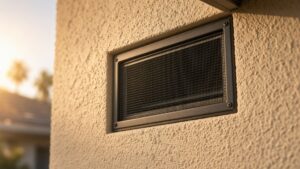
Your attic and crawl space vents are designed to let air circulate and prevent moisture buildup. But during a wildfire, those same openings become entry points for burning embers. Once an ember gets inside your attic, it lands on dust, insulation paper, stored cardboard, or wood framing. That’s all it takes. Research from UC ANR and the Insurance Institute for Business and Home Safety (IBHS) confirms that vent penetration by embers is one of the leading causes of home ignition during wildfires.
Editor’s note: Your insurance situation depends heavily on your property’s actual fire exposure. Our free risk assessment factors in official CAL FIRE data to show what your risk level actually is — useful context before talking to your carrier.
What 1/8-Inch Mesh Actually Does (and Doesn’t Do)
Standard building code for most of California requires 1/4-inch mesh on vent openings. That’s the bare minimum, and frankly, it’s not enough. A 1/4-inch opening lets embers pass through easily, and lab testing has shown those embers can ignite materials like sawdust, shredded paper, and cotton on the other side.
Upgrading to 1/8-inch mesh is a significant improvement. It reduces the size and number of embers that can penetrate, and California Building Code Chapter 7A recognizes it as an acceptable mesh size for homes in wildland-urban interface (WUI) areas. The 1/8-inch mesh has a net free area of about 75%, meaning it allows good airflow while reducing ember entry.
But here’s what most homeowners don’t hear: 1/8-inch mesh is only about 75% effective at stopping embers. That means roughly one in four embers small enough to be carried by wind can still pass through. During a wildfire, we’re not talking about a handful of embers—we’re talking about thousands. If 25% of those embers are getting into your attic, that’s still a serious ignition risk.
Not sure which step to prioritize first? Our wildfire risk calculator shows your CAL FIRE zone and exposure level — so you know exactly where to start.
Why 1/16-Inch Mesh Is the Standard We Install
At Ember Pro USA, we install 1/16-inch mesh ember-resistant vents on every project. Here’s why.
The 1/16-inch opening is small enough that embers passing through it arrive with so little mass and energy that they cannot easily ignite even fine fuels like dust and paper. The research from UC Agriculture and Natural Resources backs this up: while embers can technically still pass through 1/16-inch mesh, they’re so reduced in size that they lose their ability to start a fire on the other side.
The net free area for 1/16-inch mesh is about 71%—only a 4% reduction in airflow compared to 1/8-inch mesh. For most attics and crawl spaces in San Diego and Southern California, that small reduction in airflow is negligible. Your ventilation system will still function properly. If there’s ever a concern about adequate airflow for a specific structure, our team evaluates it during our free 10-point wildfire home inspection before we begin any work.
The Numbers That Matter
Let me put this in plain terms:
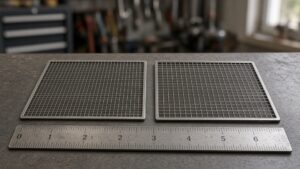
- 1/4-inch mesh (standard code minimum): Lets most wind-blown embers pass through. Inadequate for wildfire protection.
- 1/8-inch mesh: Blocks about 75% of embers. Better, but still allows a significant volume of burning material into your attic and crawl space during a major fire event.
- 1/16-inch mesh: Blocks virtually all embers, and the few that pass through are too small and cool to ignite interior materials. This is the level of protection we believe every home in a fire-prone area deserves.
The difference between 75% and near-total protection doesn’t sound dramatic until you consider that a wildfire can shower your home with embers for hours. At 75% effectiveness, you’re relying on luck that the 25% getting through won’t find something to ignite. At 1/16-inch, you’ve effectively closed the door.
The Bonus: 1/16-Inch Mesh Stops Pests Too
Here’s something homeowners don’t expect when they call us about wildfire defense: 1/16-inch mesh also keeps pests out of your attic and crawl space.
Standard 1/4-inch and even 1/8-inch mesh openings are large enough for insects, small rodents, and other pests to enter your home’s structural spaces. Wasps, bees, spiders, mice—they can all get through 1/8-inch openings. Once they’re in your attic, they build nests, chew on wiring, contaminate insulation, and create problems that cost thousands to remediate.
With 1/16-inch mesh, the openings are too small for virtually all common household pests. So when we install ember-resistant vents on your home, you’re getting wildfire defense and pest exclusion in a single upgrade. It’s a two-for-one benefit that adds real, year-round value to the investment—not just protection during fire season.
Many of our clients in Rancho Santa Fe, Poway, Escondido, and the hills of Los Angeles tell us they noticed fewer pest issues within weeks of having their vents upgraded. That wasn’t even why they called us, but it’s a benefit they appreciate every day.
These are general costs. Your actual investment depends on your property’s fire zone, exposure level, and available grants or rebates.
Check my risk scoreWhat California Code Actually Requires
California Building Code Chapter 7A, which governs construction in wildland-urban interface areas, requires that vent openings be covered with corrosion-resistant, noncombustible wire mesh. The code allows mesh sizes between 1/16-inch and 1/8-inch.
That means both sizes are code-compliant. But code compliance and optimal protection are not the same thing. The code sets a floor—a minimum standard. At Ember Pro USA, we don’t build to minimums. We install 1/16-inch mesh because it provides meaningfully better protection, and the tradeoff in airflow is minimal.
It’s worth noting that California’s building codes continue to evolve, especially after the devastating 2025 fire season. The trend is clearly toward stricter requirements, and many fire agencies and insurance companies are already recommending or requiring finer mesh. Getting ahead of that curve protects your home and can help with insurance eligibility—a topic that matters more every year for homeowners in fire-prone parts of Southern California.
Common Concerns About 1/16-Inch Mesh
I hear a few recurring questions from homeowners considering the upgrade. Let me address them directly.
Will It Reduce Airflow Too Much?
The difference in net free area between 1/8-inch mesh (75%) and 1/16-inch mesh (71%) is about 4%. In nearly every home we’ve worked on, this reduction has zero practical impact on attic or crawl space ventilation. We assess airflow as part of our inspection process, and if a specific home has marginal ventilation, we’ll discuss solutions before proceeding.
Does It Clog More Easily?
Yes, finer mesh can accumulate debris faster than coarser mesh. That’s a legitimate consideration. We recommend homeowners inspect their vents annually—ideally before fire season—and clear any buildup of leaves, dirt, or cobwebs. This is basic home maintenance that takes minutes and ensures your vents function properly for both ventilation and fire protection. Our team can also handle this during routine maintenance visits.
Is It More Expensive?
The material cost difference between 1/8-inch and 1/16-inch mesh is modest. When you factor in the added ember protection and pest exclusion, the value proposition is clear. You’re paying slightly more for significantly better protection. And in many cases, the pest-control savings alone offset the difference within a year or two.
What We Install and How We Do It
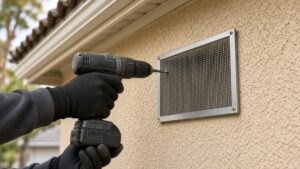
Ember Pro USA installs ember-resistant vents with 1/16-inch corrosion-resistant mesh across all vent types: foundation vents, soffit vents, gable vents, ridge vents, and eave vents. We use products that meet or exceed Chapter 7A and ASTM E2886 standards for ember and flame intrusion resistance.
Our process starts with a thorough assessment of your home’s existing ventilation. My co-founder Ryan Kresan and I built this company on doing things right, not fast. We evaluate every vent opening, check for damage or deterioration, assess airflow needs, and then install the appropriate ember-resistant vents for your specific home.
We’re licensed by the California Contractors State License Board (CSLB License #1142407), fully insured, and we stand behind every installation. Our team serves homeowners across San Diego, Los Angeles, Orange County, and Riverside County.
Don’t Wait for the Next Fire Season
Every year, fire season starts earlier and burns longer. If your home still has standard 1/4-inch mesh vents—or even 1/8-inch mesh—you have a vulnerability that can be fixed. The upgrade to 1/16-inch ember-resistant vents is one of the most cost-effective wildfire hardening measures available, and it delivers benefits year-round through pest exclusion.
If you’re ready to take the next step, here’s what I’d recommend:
- Schedule a free 10-point wildfire home inspection so our team can assess your vents and overall wildfire vulnerability.
- Contact our team with any questions. We’re here to help, not to pressure you.
- Call us directly at (858) 939-9345 in San Diego or (310) 499-4891 in Los Angeles.
Your home is your family’s biggest investment. Protecting it from wildfire doesn’t have to be complicated, but it does require the right materials and the right team. At Ember Pro USA, that’s exactly what we deliver.
Stay safe out there,
Jim Sprouse
CEO & Co-Founder, Ember Pro USA
CSLB License #1142407
Curious about your property’s actual wildfire risk? Our free calculator shows your CAL FIRE zone, exposure level, and recommended next steps based on your address.
Get your free risk scoreFrequently Asked Questions: Ember Vent Mesh Size
What is the difference between 1/16-inch and 1/8-inch ember vent mesh?
The primary difference is ember-blocking effectiveness. 1/8-inch mesh blocks approximately 75% of wind-blown embers, while 1/16-inch mesh blocks virtually all embers. The few embers small enough to pass through 1/16-inch mesh arrive with too little energy to ignite materials inside your attic or crawl space. The airflow difference is only about 4% (75% net free area for 1/8-inch vs. 71% for 1/16-inch), making the tradeoff minimal.
Does California building code require 1/16-inch mesh for wildfire areas?
California Building Code Chapter 7A allows mesh sizes between 1/16-inch and 1/8-inch for homes in wildland-urban interface (WUI) areas. Both sizes are code-compliant. However, 1/16-inch mesh provides significantly better ember protection, and many fire safety professionals recommend it as the preferred choice.
Will 1/16-inch mesh reduce airflow in my attic?
The airflow reduction from 1/16-inch mesh compared to 1/8-inch mesh is approximately 4%. In the vast majority of homes, this small reduction has no practical impact on attic or crawl space ventilation. A qualified contractor should assess your home’s ventilation needs before installation to confirm adequate airflow.
Does 1/16-inch vent mesh also keep pests out?
Yes. One of the added benefits of 1/16-inch mesh is that the openings are too small for most common household pests, including insects, wasps, and small rodents. Standard 1/4-inch and 1/8-inch mesh can allow pests into your attic and crawl space, where they damage wiring, contaminate insulation, and create costly problems.
How often should I maintain my ember-resistant vents?
We recommend inspecting and cleaning your ember-resistant vents at least once a year, ideally before fire season. Finer mesh can accumulate debris such as leaves, dirt, and cobwebs more quickly than coarser mesh. Regular cleaning ensures proper ventilation and maximum fire protection.
Is upgrading to 1/16-inch mesh vents worth the cost?
Yes. The material cost difference between 1/8-inch and 1/16-inch mesh is modest, but the protection difference is significant. You get near-total ember blocking instead of 75%, plus year-round pest exclusion. Many homeowners find that reduced pest control costs alone offset the price difference within one to two years.
What areas does Ember Pro USA serve for ember vent installation?
Ember Pro USA serves homeowners across San Diego, Los Angeles, Orange County, and Riverside County. We are licensed by the California Contractors State License Board (CSLB License #1142407). Call us at (858) 939-9345 in San Diego or (310) 499-4891 in Los Angeles.
What types of vents does Ember Pro USA upgrade with 1/16-inch mesh?
We install ember-resistant vents with 1/16-inch mesh across all vent types, including foundation vents, soffit vents, gable vents, ridge vents, and eave vents. All products we install meet or exceed California Chapter 7A and ASTM E2886 standards for ember and flame intrusion resistance.
Can embers still get through 1/16-inch mesh?
Technically, very small embers can pass through 1/16-inch mesh. However, research from UC Agriculture and Natural Resources shows that embers small enough to pass through 1/16-inch openings arrive with so little mass and thermal energy that they cannot easily ignite even fine fuels like dust and paper. This makes 1/16-inch mesh effectively a near-total barrier against ember-caused ignition.
Leave a Reply