
By Jim Sprouse, Co-founder of Ember Pro | NFPA Certified Wildfire Mitigation Specialist
California leads the nation in rooftop solar adoption, with over 1.8 million homes now equipped with photovoltaic systems. Many of those homes are in wildfire-prone areas. If you have solar panels and live in a fire zone, you need to understand how solar interacts with wildfire risk, what happens to panels during a fire, and how to protect your investment.
Curious about your property’s actual wildfire risk? Our free calculator shows your CAL FIRE zone, exposure level, and recommended next steps based on your address.
Get your free risk scoreDo Solar Panels Survive Wildfires?
It depends on the fire intensity and duration. Solar panels themselves are made of tempered glass and aluminum frames with high heat tolerance. The panels alone can withstand temperatures up to approximately 600 degrees Fahrenheit before degrading. However, the mounting hardware, wiring, conduit, and roof underneath are all vulnerable.
In moderate fire exposure, panels often survive with cosmetic damage. In direct flame contact or prolonged radiant heat exposure, panels can crack, melt at junction boxes, and the wiring can ignite. The bigger concern is what happens underneath and around them.
The Real Risk: Embers Under and Around Panels
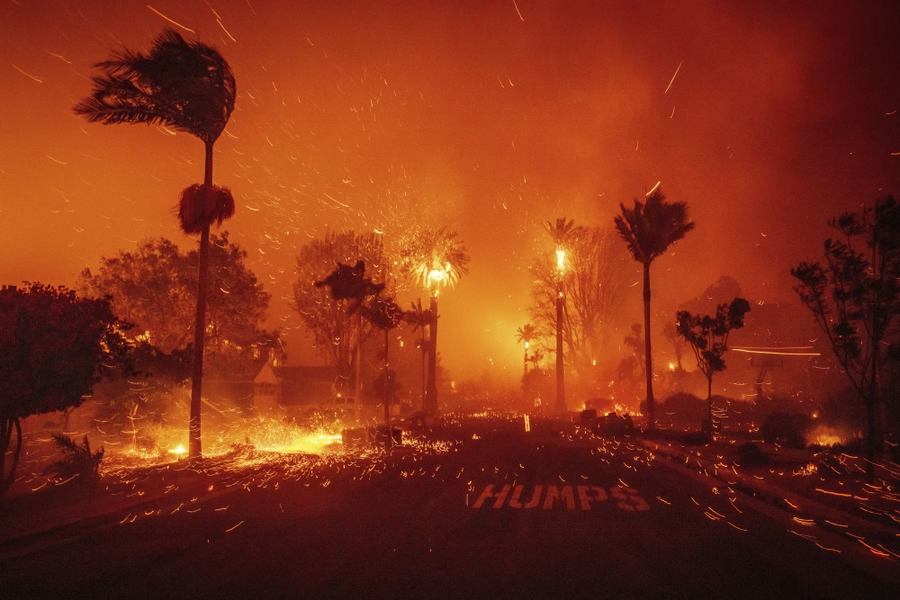
The gap between solar panels and your roof creates a sheltered space where embers accumulate. Wind-driven embers land on the roof, slide under the panels, and collect against the mounting rails and flashing. This creates concentrated ember deposits directly on your roof surface.
If your roof material is combustible or if debris has accumulated under the panels, these trapped embers can ignite a roof fire that is hidden from view and difficult to extinguish because the panels block access.
This is why homes with solar panels need additional attention during wildfire preparation:
- Keep the area under and around panels clear of leaves, needles, and debris
- Install critter guards or panel skirts that also serve as ember barriers
- Ensure the roof surface under panels is Class A fire-rated
- Trim any tree branches that overhang panels
Solar Panel Fire Risk: Fact vs Fiction
Myth: Solar panels cause house fires during wildfires
Solar panels do not spontaneously ignite during wildfires. The risk is ember accumulation underneath them and potential electrical hazards if wiring is damaged. The panels themselves are not a fire source.
Myth: You should remove solar panels before fire season
Removing panels is unnecessary and impractical. Proper maintenance, debris clearing, and critter guard installation address the risks without removing the system.
Fact: Damaged panels create electrical hazards
Solar panels generate electricity whenever light hits them, even during a fire. Damaged wiring or cracked panels can arc and create ignition sources. This is a real hazard for firefighters and is one reason fire crews sometimes avoid roof operations on solar-equipped homes.
Fact: Rapid shutdown systems improve safety
California requires rapid shutdown capability on new solar installations (NEC 690.12). This allows firefighters to de-energize the system from the ground, reducing electrical hazards during fire operations.
These are general costs. Your actual investment depends on your property’s fire zone, exposure level, and available grants or rebates.
Check my risk scoreHow to Protect Solar Panels From Wildfire
- Clear debris under panels. At least twice a year, before fire season and in fall. Remove leaves, needles, bird nests, and any organic material that has accumulated under or around panels.
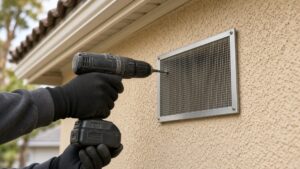
- Install critter guards with ember resistance. Metal critter guards around the panel perimeter block animals AND serve as ember barriers. Use noncombustible metal guards, not plastic.
- Verify your roof rating. Ensure the roof surface under and around panels is Class A fire-rated. If you have older shake or wood shingles visible around the panel array, those are vulnerable.
- Check wiring and conduit. Ensure all exposed wiring uses metal conduit, not plastic. Plastic conduit melts in heat and exposes live wires.
- Trim overhanging branches. No branches should overhang or touch panels. This is both a fire risk and an efficiency issue.
- Know your rapid shutdown. Know where your rapid shutdown switch is located and ensure firefighters can access it.
- Document for insurance. Photograph your solar installation, including the roof condition underneath, for your insurance records.
Solar Panels and Wildfire Insurance
Solar panels are typically covered under your dwelling coverage (Coverage A) as an attached improvement to the home. However, there are important considerations:
- Verify your coverage amount accounts for the replacement cost of your solar system, which can be $15,000 to $40,000 or more
- Some policies have sub-limits for solar equipment
- If you lease your panels, the leasing company may carry separate insurance
- Documenting the system with photos, invoices, and specifications before a fire is critical for claims
- Batteries and energy storage systems may need separate coverage or riders
Battery Storage and Wildfire Risk
Home battery systems like Tesla Powerwall or Enphase are increasingly common alongside solar. During a wildfire:
- Batteries can provide backup power during PSPS shutoffs and evacuations
- Damaged lithium-ion batteries can experience thermal runaway, creating intense fires
- Batteries should be installed in fire-resistant enclosures
- Ensure batteries are included in your rapid shutdown system
- If evacuating, consider shutting down the battery system if safe to do so
Editor’s note: Your insurance situation depends heavily on your property’s actual fire exposure. Our free risk assessment factors in official CAL FIRE data to show what your risk level actually is — useful context before talking to your carrier.
PSPS Events and Solar
During Public Safety Power Shutoff events, your solar panels alone will NOT power your home unless you have battery storage. Grid-tied solar systems without batteries shut down when the grid goes down, by design, to prevent backfeeding electricity to downed power lines.
If you live in a fire zone, adding battery storage to your solar system provides both wildfire resilience and PSPS protection.
Wondering if your property is in a high-risk fire zone? Check your wildfire risk score to see your CAL FIRE zone and exposure level based on your address.
Firefighter Considerations
Fire departments have specific protocols for homes with solar panels:
- Panels are always energized in daylight, creating electrical hazards on the roof
- Firefighters may avoid roof ventilation cuts near panel arrays
- Rapid shutdown systems allow ground-level de-energizing
- Clear labeling of shut-off locations helps fire crews
Making your solar installation firefighter-friendly is part of responsible home hardening. Ensure your rapid shutdown is clearly labeled and accessible.
Check your wildfire risk score free at risk.emberprousa.com
Frequently Asked Questions
Will solar panels survive a wildfire?
Panels often survive moderate exposure but can be damaged by direct flame or prolonged heat. The bigger risk is ember accumulation underneath them.
Should I remove my panels before fire season?
No. Clear debris underneath them, install critter guards, and ensure your roof is properly rated.
Do solar panels increase wildfire risk?
They do not cause fires, but the gap underneath can trap embers. Proper maintenance mitigates this risk.
Are solar panels covered by wildfire insurance?
Usually yes, under dwelling coverage. Verify your coverage amount includes the replacement cost of the system.
What about my Tesla Powerwall?
Battery storage adds both value and risk. Ensure it is in a fire-resistant enclosure and included in rapid shutdown protocols.
Do I need to tell my insurer about solar?
Yes. Your insurer should know about your solar installation to ensure adequate coverage.
Can firefighters shut off my solar?
If you have a rapid shutdown system (required on new CA installations), yes. Ensure the switch is clearly labeled.
What is the biggest solar wildfire risk?
Debris accumulation under panels creating concentrated ember deposits on your roof surface.
Next Steps
If you have solar panels on a home in a fire zone, add debris clearing under panels to your annual fire preparation checklist. Install metal critter guards if you do not have them. And check your wildfire risk score to understand your overall property exposure.
Protect. Defend. Preserve.
References
- California Solar Mandate (Title 24)
- NEC 690.12 Rapid Shutdown Requirements
- CAL FIRE Solar Panel Guidelines
- IBHS Rooftop Solar and Wildfire Research
- California Building Code Chapter 7A
Not sure which step to prioritize first? Our wildfire risk calculator shows your CAL FIRE zone and exposure level — so you know exactly where to start.