
By Jim Sprouse, Co-founder of Ember Pro | NFPA Certified Wildfire Mitigation Specialist
Every fire season, California homeowners ask the same question: can my swimming pool protect my home from wildfire? The answer is more complicated than yes or no. Your pool is a water reservoir, but on its own, it is not a wildfire defense system. Understanding what a pool can and cannot do during a wildfire could save your home or save you from a dangerous false sense of security.
Curious about your property’s actual wildfire risk? Our free calculator shows your CAL FIRE zone, exposure level, and recommended next steps based on your address.
Get your free risk scoreThe Myth: My Pool Will Save My House
Many homeowners believe that having a swimming pool near their home provides meaningful wildfire protection. The thinking is simple: there is a large body of water right there, so fire cannot cross it or the area around it stays wet.
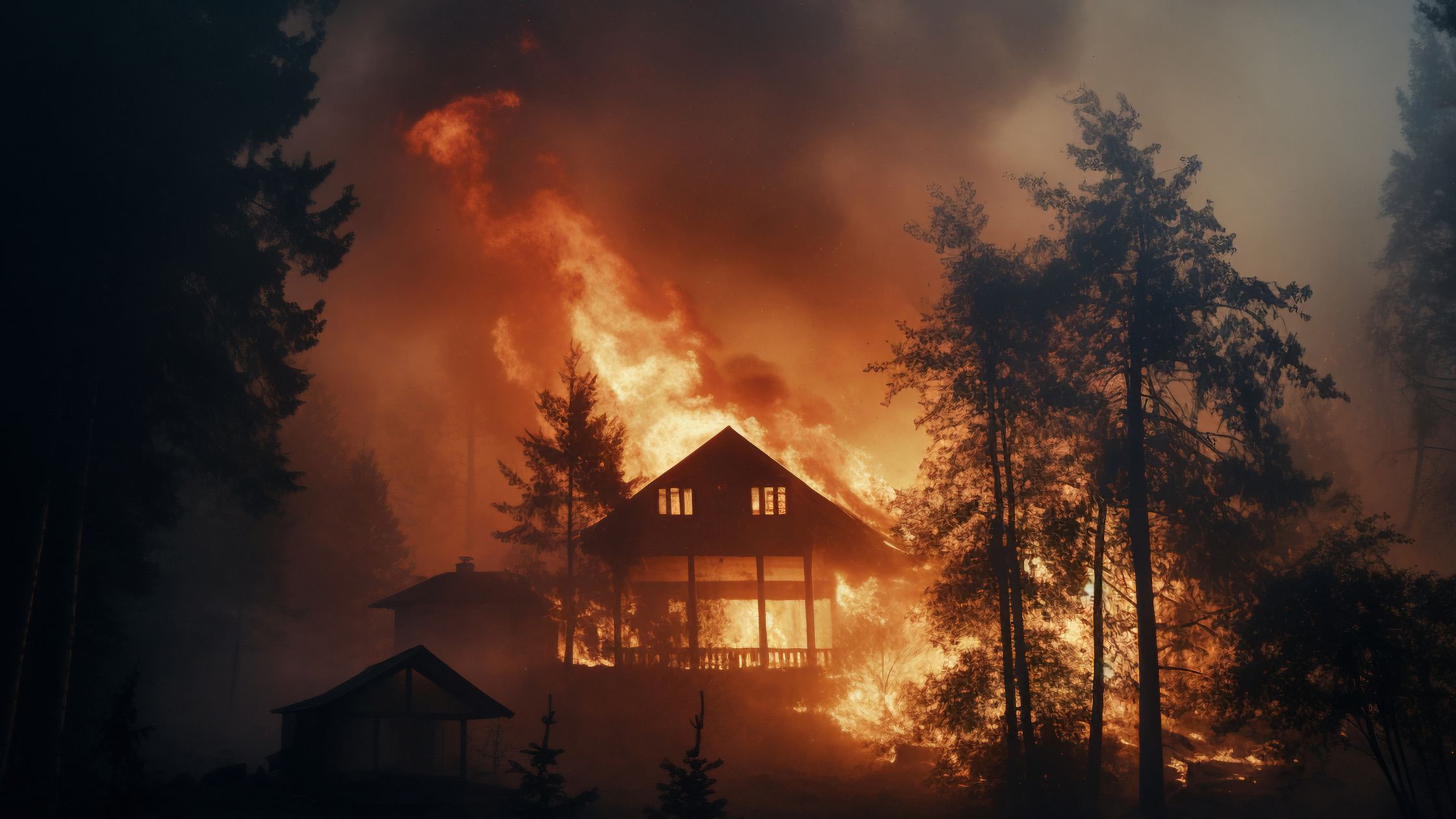
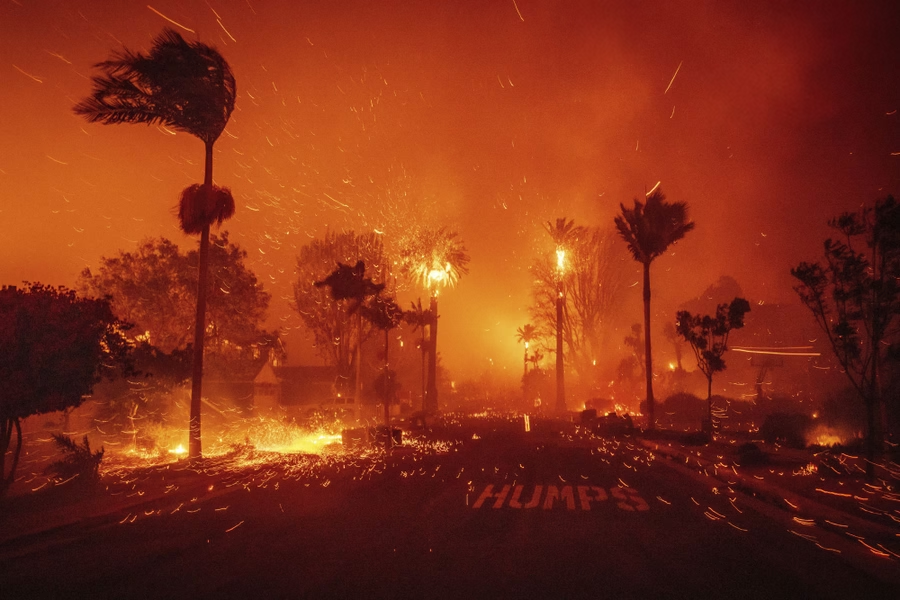
The reality is different. During a wildfire with 40 to 60 mph winds and temperatures exceeding 1,500 degrees, a backyard pool does almost nothing to protect your home unless you have a way to move that water onto the structure.
Fire does not care about your pool. Embers fly over it. Radiant heat radiates past it. Wind-driven flames move around it. A pool is a container of water, not a fire barrier.
What a Pool CAN Do
A pool becomes useful only when you can move the water from the pool to your home and landscape:
- Water source for fire pumps. A pool pump connected to a wildfire defense system can draw pool water and spray it onto your roof, walls, and surrounding vegetation. This is a legitimate wildfire defense strategy.
- Helicopter dip source. Fire helicopters sometimes use residential pools as water sources during fire operations, though this is not something you can count on.
- Wetting down vegetation. Before evacuating, you can use a pool pump and hose to wet down vegetation and structures around your home. This provides temporary protection but dries quickly in hot, windy conditions.
- Noncombustible zone. The pool deck area, if hardscape, creates a noncombustible zone that embers cannot ignite. This is a defensible space benefit.
Not sure which step to prioritize first? Our wildfire risk calculator shows your CAL FIRE zone and exposure level — so you know exactly where to start.
What a Pool CANNOT Do
- Stop embers from landing on your roof
- Block radiant heat from reaching your walls
- Prevent fire from entering through unprotected vents
- Replace defensible space or home hardening
- Protect your home while you are evacuated and the pump is off
Turning Your Pool Into a Fire Defense Asset
If you want your pool to actually contribute to wildfire defense, you need a system that moves the water:
Option 1: Dedicated Fire Pump
A gas-powered or battery-backed fire pump connected to your pool with fire hoses or a sprinkler system on the roof and walls. Cost: $500 to $3,000 for the pump plus installation. This gives you or firefighters a way to use pool water during an emergency.
Option 2: Integrated Wildfire Defense System
A professionally installed exterior sprinkler or spray system plumbed to draw from your pool as a water source. These systems can be activated remotely or automatically, meaning they work even after you evacuate. Cost: $5,000 to $25,000+ depending on coverage area and automation level.
Option 3: Pre-Evacuation Wetting
The simplest approach: before you leave, use your regular pool pump and garden hose to thoroughly wet down the roof, walls, vegetation, and fencing around your home. This is temporary protection that buys time but dries in hours during hot, windy conditions. Cost: $0 if you already have a hose and pump.
Editor’s note: Your insurance situation depends heavily on your property’s actual fire exposure. Our free risk assessment factors in official CAL FIRE data to show what your risk level actually is — useful context before talking to your carrier.
Pool Deck as Defensible Space
One genuine fire safety benefit of a pool is the hardscape around it. A concrete, stone, or paver pool deck creates a noncombustible zone that contributes to your defensible space. Embers that land on hardscape cannot ignite it.
To maximize this benefit:
- Keep the pool deck clear of combustible furniture, cushions, and umbrellas during fire season
- Remove any plants growing in planters on the deck
- Clear leaves and debris from the deck surface
- Move pool chemical storage away from the home (pool chemicals are oxidizers that can intensify fire)
Pool Chemicals: A Hidden Hazard
This is important and often overlooked. Pool chemicals like chlorine tablets, shock treatment, and muriatic acid are oxidizers and corrosives. In a fire, they can intensify combustion, produce toxic fumes, and create dangerous reactions. Store pool chemicals in a detached shed or at least 10 feet from your home, never in the garage or against the house.
Should You Shelter in Your Pool During a Fire?
No. This is a dangerous myth. While water protects you from flames, wildfire smoke contains toxic gases including carbon monoxide, hydrogen cyanide, and particulates that can be lethal. The radiant heat near a fully involved fire can cause severe burns even with water exposure. A swimming pool is not a survival shelter. Always evacuate when ordered.
Check your risk score free at risk.emberprousa.com
Frequently Asked Questions
Does having a pool lower my wildfire risk?
Not by itself. A pool is a water container, not a fire barrier. It becomes useful only when connected to a pump or defense system.
Can firefighters use my pool?
Sometimes. Helicopter crews may dip from pools, and ground crews may draft from pools if they have equipment. But do not count on this.
Should I fill my pool before fire season?
Keep it full as a potential water source. A full pool connected to a fire pump is a genuine asset.
Is the pool deck good defensible space?
Yes. Hardscape pool decks are noncombustible zones. Keep them clear of combustible furniture and debris.
Can I jump in my pool to survive a fire?
Do not attempt this. Toxic smoke and radiant heat make this extremely dangerous. Always evacuate.
Do pool chemicals create fire risk?
Yes. Chlorine and other pool chemicals are oxidizers. Store them away from your home in a detached location.
What is the best way to use my pool for fire defense?
Connect it to a dedicated fire pump or an integrated wildfire defense system that can spray water onto your home.
Does Ember Pro install pool-connected defense systems?
Yes. We design and install wildfire defense systems that can use pool water as a supply source.
Next Steps
If you have a pool, you have a water supply. The question is whether you have a way to use it. Consider a fire pump or integrated defense system. And check your wildfire risk score to understand your full property exposure.
Protect. Defend. Preserve.
References
- CAL FIRE Home Hardening Guidelines
- IBHS Wildfire Research
- NFPA Wildland Fire Standards
- California Pool Safety Act