
Compliance · AB 3074 · Defensible Space
How to Figure Out Your Zone 0 Defensible Space Laws
Your neighbor got a CAL FIRE inspection notice. You’re staring at your wood fence two feet from your siding and wondering: does Zone 0 apply to me? And if it does, what exactly do I have to change?
The answer depends on three things: where your property sits, which agency has fire jurisdiction, and whether your local government adopted rules stricter than the state minimum. We’ll walk through each one.
Not sure which step to prioritize first? Our wildfire risk calculator shows your CAL FIRE zone and exposure level — so you know exactly where to start.
What Zone 0 Actually Is
Zone 0 covers the first five feet measured outward from any structure on your property, including attached decks, porches, and pergolas. California Assembly Bill 3074, signed in October 2021, amended Public Resources Code Section 4291 to add this ember-resistant zone on top of the existing 100-foot defensible space requirement.
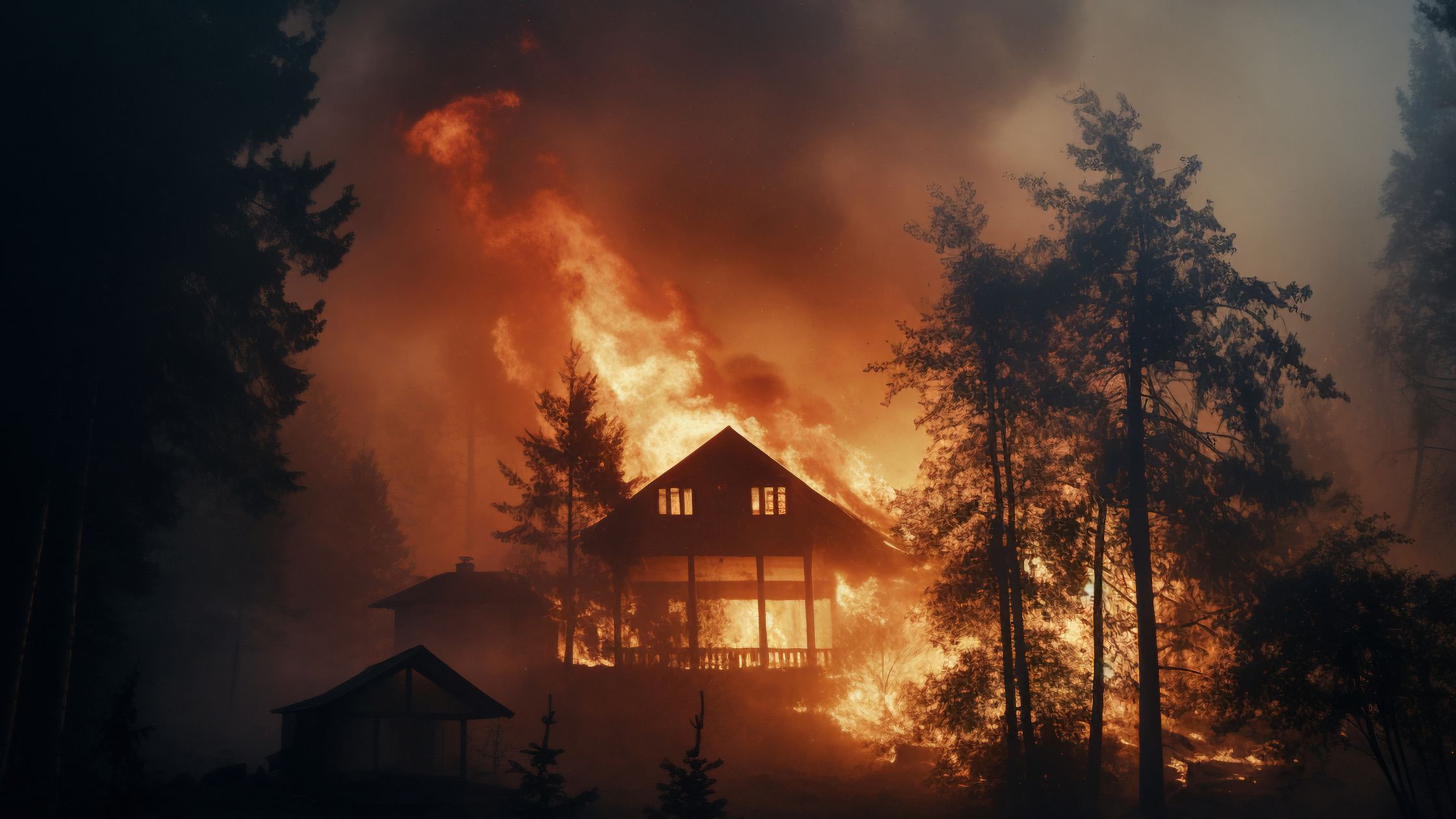
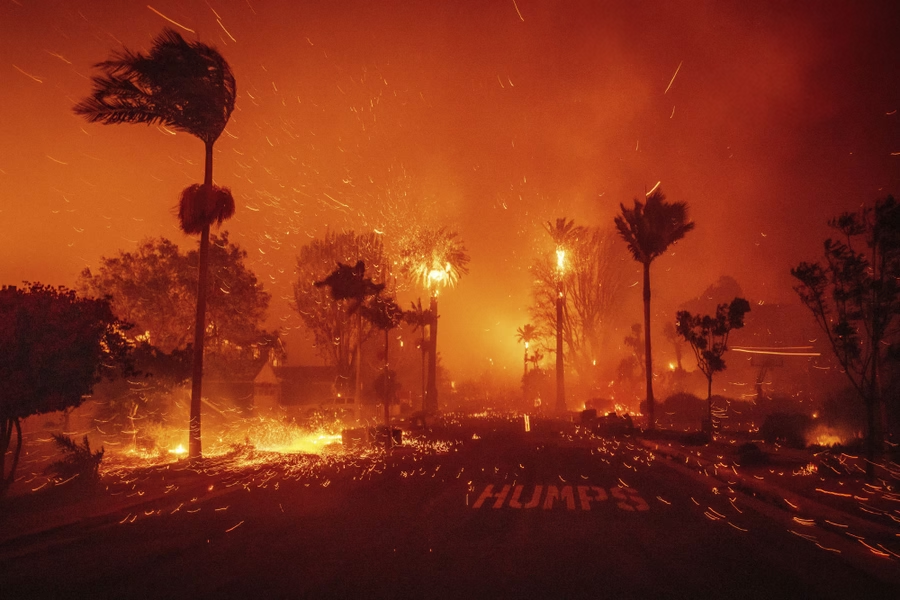
The idea is straightforward. During a wildfire, embers land on and around homes before flames arrive. If those embers hit dry mulch, a wood fence post, or a stack of patio furniture within five feet of your wall, the structure ignites from the outside in. Zone 0 eliminates that fuel.
California is the only state that has codified a 0-to-5-foot ember-resistant zone into law. Colorado, Oregon, Washington, and other fire-prone states recommend the same approach through their forestry agencies, but none mandate it by statute.
Step 1: Find Your Fire Jurisdiction
California splits fire responsibility into three buckets:
- State Responsibility Area (SRA) — CAL FIRE has direct enforcement authority. This covers most unincorporated wildland-urban interface land. PRC 4291 applies fully.
- Local Responsibility Area (LRA) — Your city or county fire department enforces. Many LRA agencies have adopted Zone 0 standards equal to or stricter than the state requirement.
- Federal Responsibility Area (FRA) — U.S. Forest Service or BLM land. Federal regulations may also apply if your property borders federal land.
You can check your jurisdiction at CAL FIRE’s SRA Viewer. Type in your address. If you’re in the SRA, CAL FIRE inspects your property. If you’re in the LRA, call your local fire department and ask which defensible space ordinance applies.
Step 2: Check Your Fire Hazard Severity Zone
CAL FIRE’s Fire and Resource Assessment Program (FRAP) classifies every parcel in California as Moderate, High, or Very High Fire Hazard Severity Zone (FHSZ). The classification determines how strict your requirements are and whether additional local ordinances kick in.
Look up your parcel at egis.fire.ca.gov/FHSZ. Properties in Very High FHSZ zones face the tightest requirements and the most frequent inspections.
San Diego County has some of the highest concentrations of Very High FHSZ parcels in the state. If you live in Rancho Bernardo, Poway, Ramona, Julian, Alpine, Jamul, or the eastern edges of Escondido, your property almost certainly falls into this category.
Step 3: Check Your Local Fire Code
Cities and counties can adopt defensible space rules stricter than PRC 4291. Many already have. The City of San Diego, for example, has its own Brush Management Program with specific vegetation zones that overlap with Zone 0 requirements.
Contact your local fire department or county fire authority and ask two questions:
- Has this jurisdiction adopted a Zone 0 / ember-resistant zone ordinance?
- Are there local fencing, vegetation, or materials requirements beyond the state code?
Your local Fire Safe Council is another resource. These are volunteer-run organizations that track local fire codes and connect homeowners with compliance information. The San Diego Regional Fire Foundation and Fire Safe Council of San Diego County both maintain current guidance.
What Zone 0 Requires
Based on PRC 4291 and CAL FIRE/IBHS guidance, Zone 0 compliance covers these areas:
Vegetation
No combustible plants, grasses, shrubs, or ground cover within five feet of the structure. Isolated, well-pruned trees may be allowed if they don’t create a continuous fuel path to the wall. Potted plants in combustible containers count as fuel and need to move.
Ground Cover
No wood chip or bark mulch. Replace it with decomposed granite, gravel, concrete, or pavers. The IBHS ran 17 controlled experiments in December 2025 showing that even well-watered plants within five feet increased heat exposure and structural damage during ember attacks.
Fencing
Wood or composite fencing that attaches directly to your home or passes through Zone 0 is a direct flame path. Replace at least the first five feet with non-combustible material: steel, wrought iron, masonry, or concrete. AB 3074 treats this as a critical ignition pathway. See our complete guide to fire-resistant fence materials for a material-by-material breakdown.
Decks
PRC 4291 treats attached decks as part of the structure. Combustible materials cannot accumulate on, under, or adjacent to any attached deck. Clear stored items, stack firewood at least 30 feet away, and move propane tanks out of Zone 0 entirely.
Outdoor Items
Patio furniture, doormats, storage bins, and decorative items made of combustible materials need to be outside the five-foot perimeter or replaced with fire-resistant alternatives.
Vents and Gutters
Foundation, eave, and attic vents must be screened with 1/16-inch or 1/8-inch non-combustible metal mesh. Gutters must be clear of leaves and needles. Embers collect in both and ignite homes from above. Learn why professional vent installation matters.
What Happens If You Don’t Comply
CAL FIRE inspectors can inspect SRA properties annually or on complaint. A failed inspection triggers a Notice of Violation with a compliance deadline, typically 30 days.
If you ignore the notice, the State Fire Marshal can authorize vegetation removal on your property and attach the cost as a lien on your parcel. That lien follows the property through sale.
Non-compliance is a misdemeanor under California law. Local jurisdictions can impose administrative fines from $100 to $1,000 per violation per day. San Diego and Los Angeles counties both have escalating fine schedules.
The steeper risk is civil liability. If your non-compliant property contributes to a fire spreading to neighboring structures, you face cost recovery lawsuits. CAL FIRE pursues these aggressively.
The Insurance Problem
Fines are one thing. Losing your homeowner’s insurance is another.
State Farm, Allstate, Farmers, and USAA have all paused or restricted new policies in California wildfire-risk areas. Non-renewal rates in high-FHSZ zones have spiked. If you’re shopping for coverage or trying to keep the policy you have, documented Zone 0 compliance is becoming a baseline requirement.
California’s “Safer from Wildfires” framework, a joint effort between the Department of Insurance and CAL FIRE, now requires insurers to offer premium discounts for homeowners who complete specific mitigation measures. Zone 0 work qualifies. Get your compliance documented with photos, receipts for non-combustible materials, and a passing CAL FIRE or fire department inspection.
The IBHS Wildfire Prepared Home certification goes a step further. Insurers in California, Colorado, and Oregon are starting to offer premium discounts or prioritize coverage for properties with this third-party designation.
Editor’s note: Your insurance situation depends heavily on your property’s actual fire exposure. Our free risk assessment factors in official CAL FIRE data to show what your risk level actually is — useful context before talking to your carrier.
Colorado and Other States
If you’re outside California, no state mandates Zone 0 by law. But the insurance market is pushing the same standard nationwide.
Colorado’s Home Ignition Zone framework designates 0-5 feet as the highest-priority area. The state offers a wildfire mitigation income tax credit through 2027 for homeowners who spend money on fuel reduction in this zone. Oregon, Washington, Montana, and Arizona all publish similar voluntary guidelines through their forestry agencies.
Even without a legal mandate, your insurer may require it. Call your carrier and ask if they use IBHS or NFPA Firewise standards for underwriting wildfire risk.
Get a Zone 0 Assessment
If you’re in San Diego or Los Angeles County, Ember Pro can walk your property and identify every Zone 0 deficiency. We replace combustible fencing and gates, clear vegetation, install non-combustible ground cover, and document the work for your insurance carrier.
Check Your Wildfire Risk Score →
Or call us: San Diego (858) 939-9345 · Los Angeles (310) 499-4891
Curious about your property’s actual wildfire risk? Our free calculator shows your CAL FIRE zone, exposure level, and recommended next steps based on your address.
Get your free risk score
Leave a Reply