
Home Hardening Contractor in San Diego: How to Protect Your Home From the Next Wildfire
I grew up studying environmental science at Allegheny College, and even then I understood that the relationship between humans and wildfire was broken. We kept building into fire-prone landscapes without adapting the way we built. Decades later, that problem has not gone away. It has gotten worse. And here in San Diego County, where Santa Ana winds can push a fire across miles in hours, the consequences of ignoring home hardening are severe.
My name is Jim Sprouse, and I co-founded Ember Pro USA with Ryan Kresan because we saw a gap in wildfire defense that nobody was filling well. Most contractors treat fire protection as an afterthought or a line item on a roofing bid. We built an entire company around it. If you are looking for a home hardening contractor in San Diego who actually specializes in wildfire-resilient construction, this post will walk you through everything you need to know.
Editor’s note: Your insurance situation depends heavily on your property’s actual fire exposure. Our free risk assessment factors in official CAL FIRE data to show what your risk level actually is — useful context before talking to your carrier.
What Is Home Hardening?
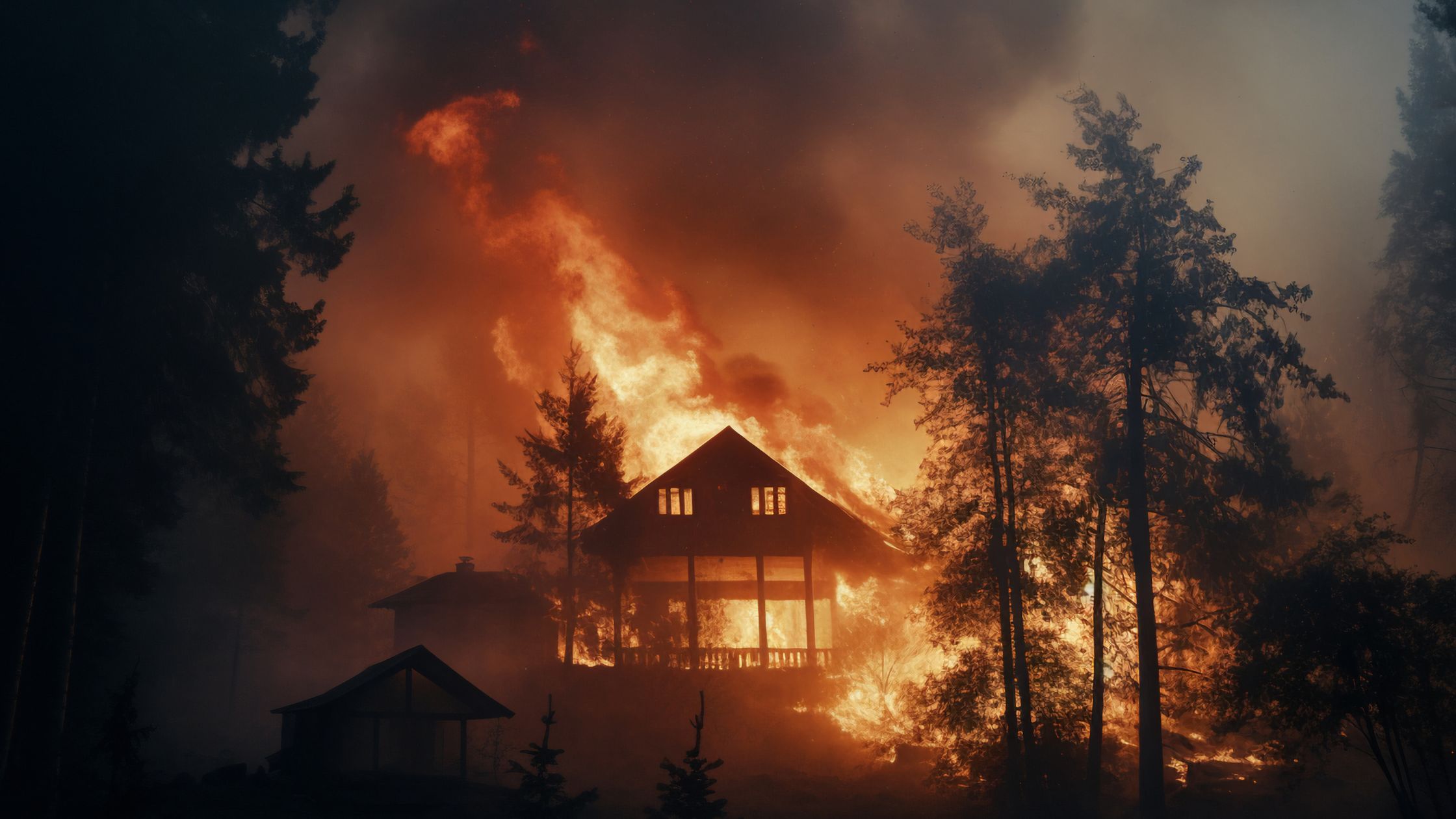
Home hardening is the process of retrofitting your home’s exterior with fire-resistant materials and construction techniques so it can survive a wildfire without direct firefighter intervention. The concept is straightforward: wildfire does not usually destroy homes through a wall of flame rolling through the front door. It destroys homes through embers.
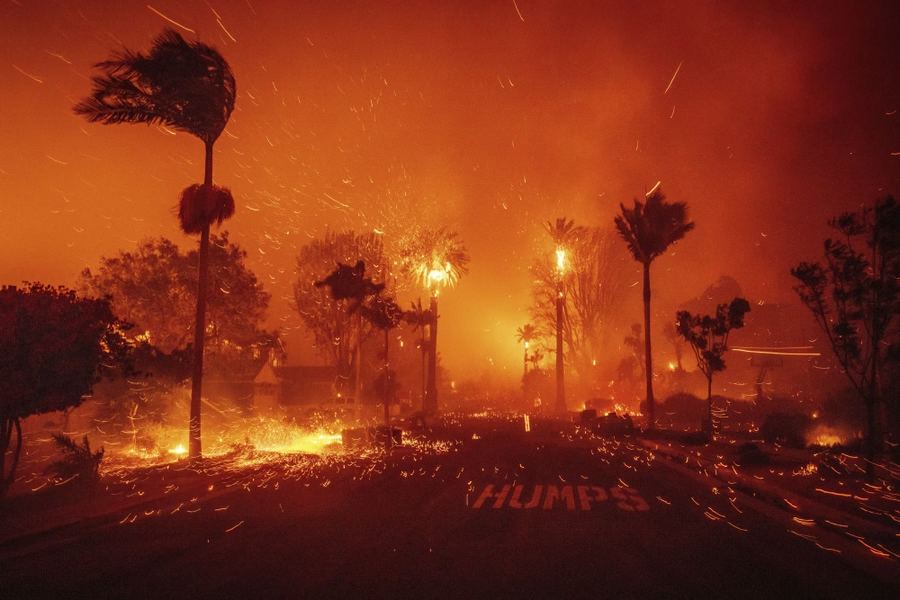
Research from CAL FIRE and the Insurance Institute for Business and Home Safety has consistently shown that roughly 90 percent of homes lost in wildfires are ignited by wind-driven embers, not direct flame contact. Those embers travel up to a mile ahead of the fire front. They land in gutters filled with dry leaves, slip through unscreened attic vents, lodge in the gaps between deck boards, and ignite the fence panel attached to your house.
Home hardening addresses every one of those vulnerabilities systematically. It is not a single product or a single upgrade. It is a comprehensive approach to making every exterior component of your home resistant to ember intrusion and radiant heat.
California Home Hardening Requirements: What the Law Now Demands
California has become the most aggressive state in the nation when it comes to wildfire building standards, and for good reason. After the devastating fires in Paradise, Sonoma, and more recently the 2025 Los Angeles fires, the state legislature passed a series of laws that fundamentally changed what homeowners in high-risk areas must do.
Assembly Bill 3074 directed the State Fire Marshal to develop a list of low-cost, retrofit improvements for existing homes in the Wildland-Urban Interface (WUI). These are not suggestions. For homes being sold in high or very high fire hazard severity zones, California now requires disclosure of the property’s hardening status. Insurance companies have followed suit. Many carriers in San Diego County will not write or renew a policy on a home that lacks documented hardening improvements.
The California Building Code, Chapter 7A, sets the baseline for new construction in WUI areas. But the retrofit requirements are what affect the majority of existing homeowners. If your home was built before 2008, there is a strong chance it does not meet current wildfire construction standards for roofing, venting, siding, or eave protection.
This is not optional anymore. It is the cost of living in a fire-prone area, and it is the cost of keeping your insurance.
The Components of a Complete Home Hardening Project
Roofing
Your roof is the largest horizontal surface on your home and the most exposed to ember showers. A Class A fire-rated roof is the minimum standard in California WUI zones. This includes not just the roofing material itself but the underlayment beneath it. A tile roof over combustible underlayment is not a hardened roof. We ensure that the entire roof assembly, from the decking up, meets or exceeds Class A requirements.
Vents
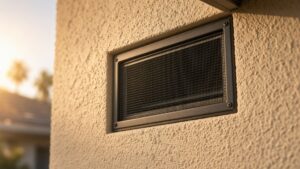
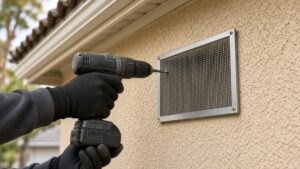
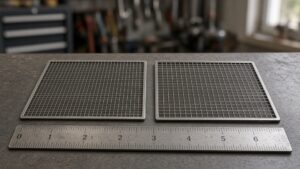
Attic, soffit, and crawlspace vents are the single most overlooked vulnerability in wildfire defense. Standard quarter-inch mesh screening does almost nothing to stop embers. Embers as small as a few millimeters can pass through and ignite insulation, stored items, or framing inside your attic. We install ember-resistant vents that use intumescent technology or layered screening systems to block ember intrusion without compromising airflow. This one upgrade alone can make the difference between a home that survives and one that burns from the inside out.
Siding and Exterior Walls
Wood siding, vinyl siding, and other combustible exterior cladding materials are significant fire risks, particularly when exposed to radiant heat from a burning neighbor’s structure or vegetation. Fiber cement, stucco, and certain metal cladding systems provide non-combustible alternatives that do not ignite from ember contact or radiant heat exposure. We assess your existing siding and recommend targeted replacements where the fire risk is highest, often focusing on the sides of the home most exposed to prevailing wind patterns and adjacent fuel loads.
Windows and Glazing
Single-pane windows can crack and shatter from radiant heat at temperatures well below what a nearby vegetation fire produces. Once a window fails, embers pour into the home and the structure is lost. Dual-pane tempered glass is the minimum standard. In high-exposure areas, we recommend and install windows with a fire-resistance rating that can withstand prolonged radiant heat exposure without failure.
Eaves and Soffits
Open eaves are essentially ember traps. The exposed rafter tails and underside of the roof decking catch embers and allow fire to establish in the most structurally critical part of your home. Boxing in eaves with non-combustible soffit material and ensuring all vents in that area are ember-resistant is a priority in every hardening project we complete.
Decks and Attached Structures
A wood deck attached to your home is a direct fuel bridge from the landscape to your structure. Under-deck areas are particularly dangerous because embers accumulate in the sheltered space beneath the deck boards and ignite debris that has collected there. We install fire-resistant composite decking, non-combustible screening for under-deck areas, and ensure that deck-to-wall connections use non-combustible flashing and materials.
Fencing
Your fence is one of the most dangerous and least discussed wildfire vulnerabilities. A wood fence attached to your home acts as a wick, carrying fire directly from the property line to your exterior wall. California fire codes in WUI zones now recommend that the first five feet of fencing from the structure be non-combustible. We install metal and fire-resistant fencing solutions that eliminate this fuel pathway without sacrificing aesthetics or privacy.
Gutters and Gutter Guards
Gutters filled with dry leaves and pine needles are essentially pre-loaded fire starters mounted to your fascia. Non-combustible gutter guards that prevent debris accumulation are a simple, cost-effective hardening measure that we include in every comprehensive project.
Not sure which step to prioritize first? Our wildfire risk calculator shows your CAL FIRE zone and exposure level — so you know exactly where to start.
What Makes Ember Pro Different From Other Home Hardening Contractors
There are roofing companies and general contractors in San Diego who will tell you they do home hardening. What most of them actually do is install a Class A roof or swap out some vents and call it done. That is not home hardening. That is a partial upgrade that may not satisfy your insurer, may not meet code requirements, and may not actually protect your home.
Here is what we do differently at Ember Pro.
We are wildfire defense specialists, not general contractors who added a service line. Ryan Kresan and I built Ember Pro specifically to address the full spectrum of wildfire home protection. Every project we take on is evaluated as a complete system, not a checklist of individual products.
Citrotech fire inhibitor application. Beyond structural hardening, we offer Citrotech fire inhibitor treatments for exterior surfaces, vegetation, and critical exposure areas around the home. Citrotech is an eco-friendly, plant-based fire retardant that significantly reduces the ignitability of treated surfaces. This is a layer of protection that no roofing contractor or general contractor is offering, because they do not operate in the wildfire defense space the way we do.
Off-grid, remotely activated defense systems. For properties in remote or high-risk areas where firefighter response times may be long, we design and install remotely activated exterior sprinkler and misting systems that can be triggered from a phone. These systems operate off-grid with independent water supplies, meaning they function during power shutoffs and evacuations. You can activate your home’s perimeter defense from fifty miles away while sitting in an evacuation shelter.
Full documentation for insurance compliance. Every project we complete includes detailed before-and-after documentation, material specifications, and a compliance summary that you can submit directly to your insurance carrier. We have seen too many homeowners spend money on upgrades and then lose their insurance anyway because they could not prove to the carrier what was done. We solve that problem on the front end.
Licensed and specialized. Ember Pro USA operates under CSLB License #1142407. We are not a handyman service experimenting with fire protection. We are a licensed, insured contractor with a singular focus on keeping homes standing when wildfires hit.
Curious about your property’s actual wildfire risk? Our free calculator shows your CAL FIRE zone, exposure level, and recommended next steps based on your address.
Get your free risk scoreThe Insurance Crisis and Why Home Hardening Is No Longer Optional
If you own a home in San Diego County, you have likely already felt the insurance crisis. Carriers are non-renewing policies across fire-prone zip codes. Premiums are doubling and tripling for those who can still get coverage. The California FAIR Plan, the insurer of last resort, has seen enrollment spike dramatically, and its coverage is expensive and limited.
Home hardening is now the primary tool homeowners have to maintain insurability. Multiple carriers have introduced programs that offer reduced premiums or guaranteed renewal for homes that meet specific hardening standards. Documenting your hardening improvements is not just about fire safety anymore. It is about keeping a roof over your family’s head in the financial sense as well.
We work with homeowners across San Diego, Los Angeles, Orange County, and Riverside County who are facing non-renewal notices. In many cases, a documented home hardening project completed by a licensed contractor is enough to reverse that decision and get coverage reinstated.
Our Process: From Inspection to Completion
We start every engagement with a free 10-point wildfire home inspection. This is not a sales pitch disguised as an assessment. It is a structured evaluation of your home’s ten most critical wildfire vulnerability points, from your roof assembly and vent systems to your fencing, landscaping setbacks, and attached structures.
After the inspection, we provide a prioritized scope of work that addresses the highest-risk items first. We understand that not every homeowner can do everything at once. We help you build a phased plan that gets the most critical protections in place immediately while planning for additional improvements over time.
Every project is completed by our trained crews, not subcontracted out to whoever is available. And every project concludes with the documentation package your insurer needs.
Schedule your free 10-point wildfire home inspection here or call us directly at (858) 939-9345.
Frequently Asked Questions About Home Hardening in San Diego
What does home hardening cost in San Diego?
Costs vary significantly depending on the size of your home, its current condition, and the scope of work needed. A focused project addressing vents and eaves may run a few thousand dollars. A comprehensive hardening of a larger home involving roofing, siding, windows, decking, and fencing can range into the tens of thousands. We provide detailed estimates after our free inspection so you know exactly what each component costs and can prioritize accordingly.
Is home hardening required by California law?
For new construction in designated WUI and fire hazard severity zones, Chapter 7A of the California Building Code mandates fire-resistant construction. For existing homes, AB 3074 and subsequent legislation require disclosure of hardening status during real estate transactions and have established retrofit standards. While there is no current mandate forcing all existing homeowners to retrofit immediately, insurance market conditions have made it effectively mandatory for anyone who wants to maintain coverage.
Will home hardening lower my insurance premium?
In many cases, yes. Several California insurers now offer premium reductions or guaranteed renewals for homes that meet documented hardening standards. The key word is documented. You need a licensed contractor who provides the material specs, photos, and compliance summaries your carrier requires. That is exactly what Ember Pro delivers with every project.
How long does a home hardening project take?
Most residential projects are completed within one to three weeks depending on scope. A vent and eave upgrade may take two to three days. A full-scope project involving roofing, siding, windows, and fencing will take longer. We provide a detailed timeline with every proposal and keep you informed throughout the process.
What is the difference between home hardening and defensible space?
Defensible space refers to the vegetation management and landscaping around your home, typically divided into zones extending outward from the structure. Home hardening refers to the structure itself, specifically the materials, construction methods, and components that make the building resistant to ember intrusion and radiant heat. Both are essential for complete wildfire protection, and they work as a system. A perfectly hardened home surrounded by dense, dry brush is still at risk, and a well-cleared property with a vulnerable structure will still burn.
Can I do home hardening myself?
Some basic improvements like cleaning gutters, removing debris from under decks, and installing basic gutter guards can be done by handy homeowners. However, structural modifications like vent replacements, siding upgrades, window installations, and eave boxing require a licensed contractor to ensure the work meets California building codes and is documented properly for insurance purposes. Improper installation of fire-resistant products can actually create new vulnerabilities.
Does Ember Pro only serve San Diego?
No. While San Diego County is our home base, we serve homeowners throughout Southern California, including Los Angeles County, Orange County, and Riverside County. Wildfire risk does not respect county lines, and neither do we.
What is Citrotech and how does it help protect my home?
Citrotech is an eco-friendly, plant-based fire inhibitor that we apply to exterior surfaces, landscaping, and high-exposure areas around your home. It significantly reduces the ignitability of treated materials, providing an additional layer of protection beyond structural hardening alone. It is non-toxic, biodegradable, and safe for use around families, pets, and landscaping. Think of it as a fire-resistant coating for everything structural hardening cannot replace.
How do I get started with Ember Pro?
The first step is our free 10-point wildfire home inspection. We evaluate your home’s specific vulnerabilities and provide a prioritized, no-pressure recommendation for improvements. Contact us here or call (858) 939-9345 to schedule your inspection. We will take it from there.
Protect Your Home Before the Next Fire Season
San Diego County has burned before, and it will burn again. The question is not whether wildfire will threaten your neighborhood. The question is whether your home is ready when it does. Home hardening is the single most effective action you can take to protect your property, your family, and your financial security.
At Ember Pro USA, this is all we do. We are not a roofing company that added a fire service. We are not a general contractor dabbling in wildfire protection. We are wildfire defense specialists with the training, the technology, and the track record to harden your home the right way.
Schedule your free 10-point wildfire home inspection today or call us at (858) 939-9345. Let us show you exactly where your home is vulnerable and what it takes to fix it.
Leave a Reply